/Sweepstakes casino bans: what operators and affiliates faced/Stake sponsorship case: Everton, UFC, F1 and Kick/Sportsbook marketing: what DraftKings and FanDuel spend/SaaS Affiliate Programs: A Blogger's $680K Semrush Case/Robux gambling ruling: why affiliates are exposed/PrizePicks: how DFS pick'em became a $2.5bn US business/Popunder Ads Case: $30K in MENA, 1,536 iGaming FTDs/Player lifetime value case: $9,125 in CPA, $61,376 GGR
Episode from Where Is My Money. Summarised by the AffHouse newsroom from the full episode. How we work →
Aired Published Updated
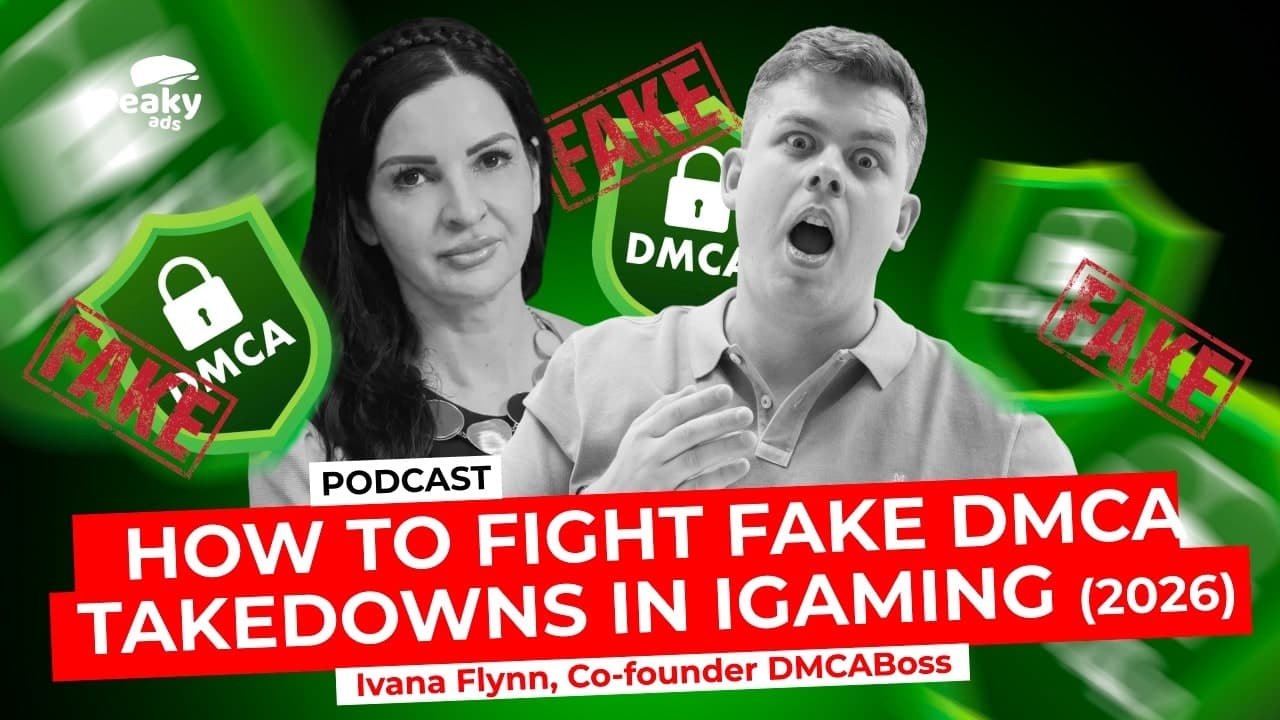
A fake copyright notice can pull a casino money page out of Google in hours, and Google often will not tell you. Ivana Flynn, co-founder of DMCABoss, has filed counter notices on close to a thousand URLs and explains her recovery playbook on the Where Is My Money podcast from Peaky Ads.
In this episode
Flynn says Google takes pages down without checking the claim, and does not always tell the site owner, so she checks for DMCA first when a client's traffic vanishes (6:36, 6:55, 11:02).
Notices are sloppy: she sees claims that a URL was stolen from the same domain (10:41, 10:55).
Google's stated recovery time is 10 to 14 days, she says, but the long queue now takes 3 months plus, while the short queue takes 12 to 24 hours (12:33, 12:41, 12:45).
Repeat attacks hit a wall: Google tells you not to resubmit previously submitted URLs, and she will not share her workaround publicly (14:44, 15:43, 16:15).
A claim on Lumen does not mean Google acted on it, so she checks with site: searches, files counter notices one by one in four or five short lines, and says bulk filing, capped at 100, goes to the long queue (26:16, 26:59, 27:19, 29:06).
She advises against redirecting a hit URL, since the attacker will find the new one (47:15, 47:19).
Episode from Where Is My Money, the Peaky Ads podcast, published on YouTube.