/Sweepstakes casino bans: what operators and affiliates faced/Stake sponsorship case: Everton, UFC, F1 and Kick/Sportsbook marketing: what DraftKings and FanDuel spend/SaaS Affiliate Programs: A Blogger's $680K Semrush Case/Robux gambling ruling: why affiliates are exposed/PrizePicks: how DFS pick'em became a $2.5bn US business/Popunder Ads Case: $30K in MENA, 1,536 iGaming FTDs/Player lifetime value case: $9,125 in CPA, $61,376 GGR
Episode from The Affiliate Marketing Podcast. Summarised by the AffHouse newsroom from the full episode. How we work →
Aired Published Updated
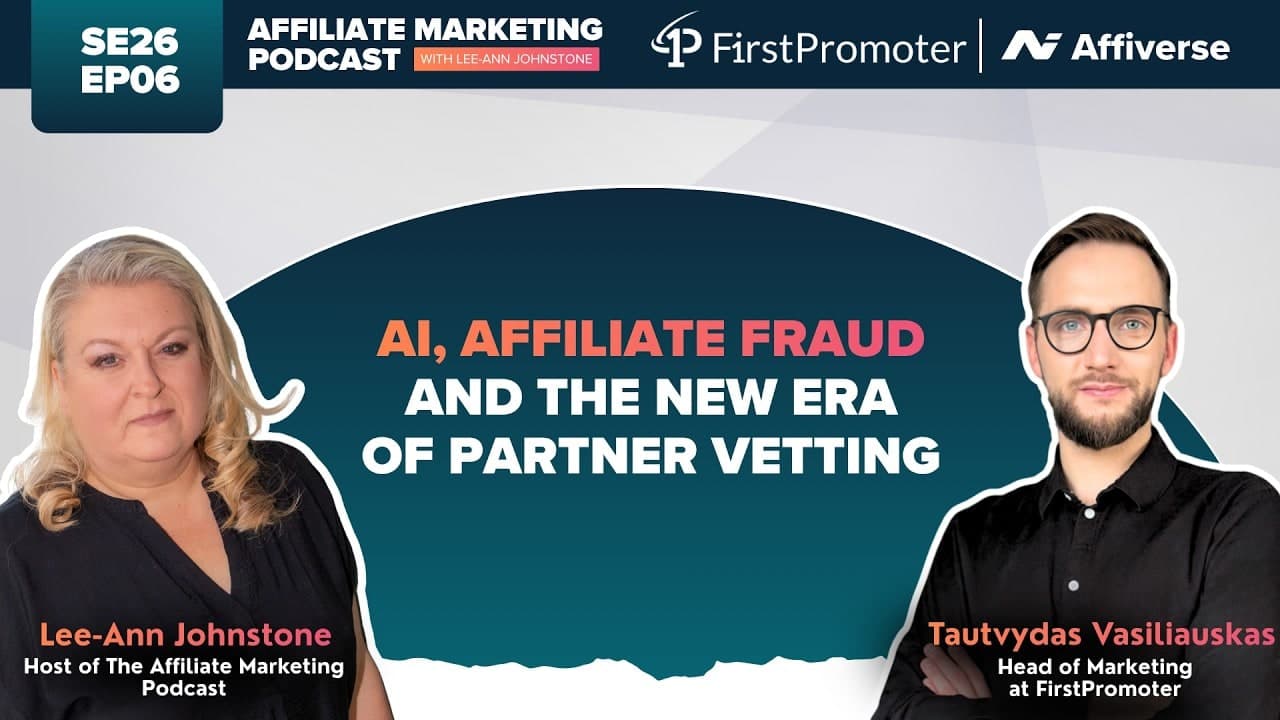
AI is bringing old affiliate fraud tactics back at a new scale, and programs that skip partner checks pay for it. Tautvydas Vasiliauskas, who runs marketing at FirstPromoter and has over a decade in affiliate marketing, tells host Lee Ann Johnston what fraud now looks like and how program managers should respond.
In this episode
He says AI removes the barrier to entry: no coding or design experience is needed, and anyone can spend an afternoon creating 10 websites (12:26, 12:45).
Old tricks such as private blog networks are "coming back just wearing a different coat", now joined by fake influencers built from AI avatars and voiceovers (11:27, 11:46, 13:07).
Fake sites can be picked up by LLMs and search engines for a short time; once they rank, they pitch affiliate programs for placements, then drop, and the program has lost money (18:13, 18:45).
To spot fakes: real videos show messy, curvy view patterns while bot views give a straight line or odd spikes, and always check the content yourself (20:09, 20:36, 24:16).
Johnston urges managers to build a partner quality checklist for each partner type and to be selective about who gets free trials (21:50, 22:56).
Johnston argues for quality over quantity; he says many SaaS teams fail here, letting anyone in under pressure to grow, and expects way more fraud, especially from fake influencers (25:56, 26:13, 26:22, 27:53).
Episode from The Affiliate Marketing Podcast by Affiverse, published on YouTube.